Amsterdam Indonesian Food: The Legacy That Never Left
The Netherlands colonised Indonesia for 350 years and the culinary inheritance runs deep. Amsterdam has one of the best Indonesian food scenes outside Southeast Asia, and it is almost invisible to visitors who arrive expecting Dutch food.
The rijsttafel
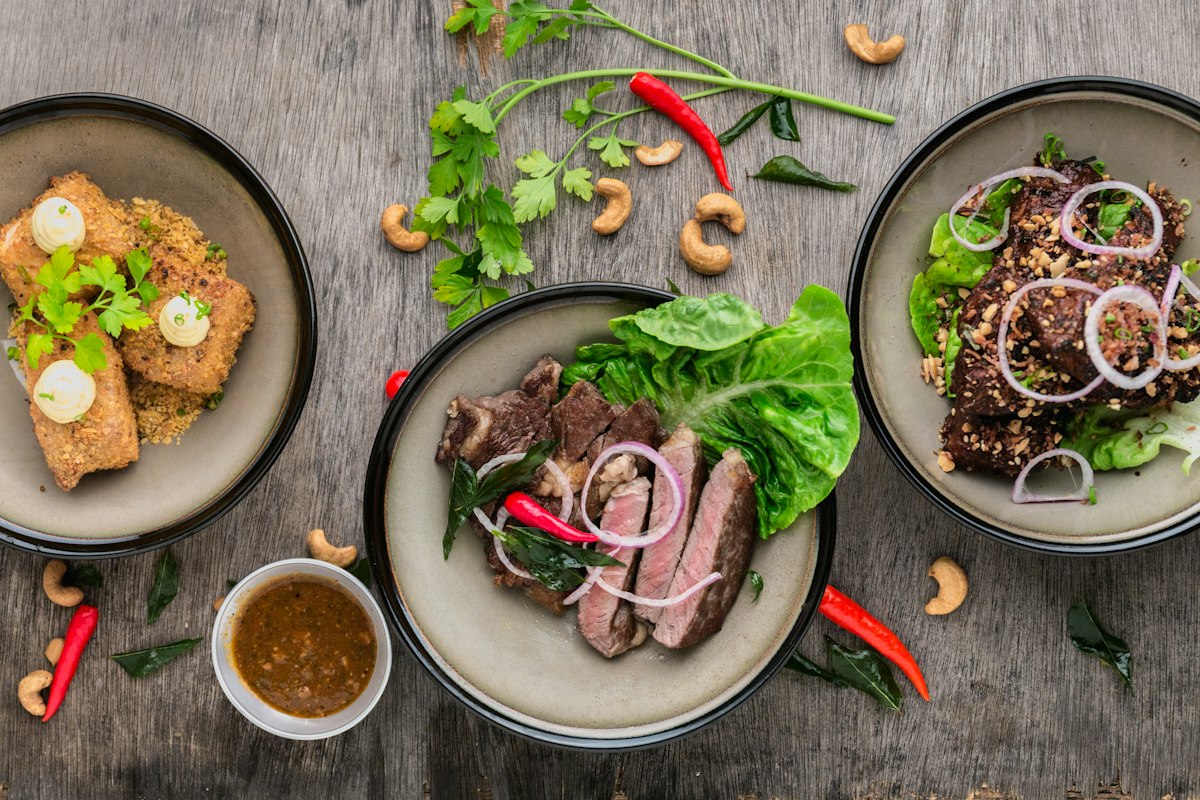
The rijsttafel — rice table — is the Dutch-Indonesian invention that exists nowhere else in quite this form: a central bowl of rice surrounded by ten to thirty small dishes, each bringing a different flavour. It was designed by Dutch colonial administrators for entertaining. It is now one of the most distinctive dining experiences in Amsterdam. Restaurant Speciëel at Nieuwe Leliestraat 142 does a serious version at a serious price. For a simpler introduction, the Indonesian takeaways around the city provide better value.
The Surinamese-Indonesian connection
A significant portion of Amsterdam’s Indonesian food comes via the Surinamese community — people of Javanese descent who came to Suriname as colonial labourers and then to the Netherlands after Surinamese independence. The bami goreng and nasi goreng at Surinamese-Javanese takeaways is different from the restaurant version — cheaper, often better, and carries a different history.
Where to eat
The Indonesian and Surinamese-Indonesian restaurants and takeaways are concentrated in De Pijp, the Bijlmer, and parts of the Indische Buurt. The Bijlmer in particular — a postwar housing district in Amsterdam Zuidoost — has some of the most authentic Indonesian cooking in the city. It takes 20 minutes on the metro from Centraal. Almost no tourists go there. It is one of the best food trips in the city.