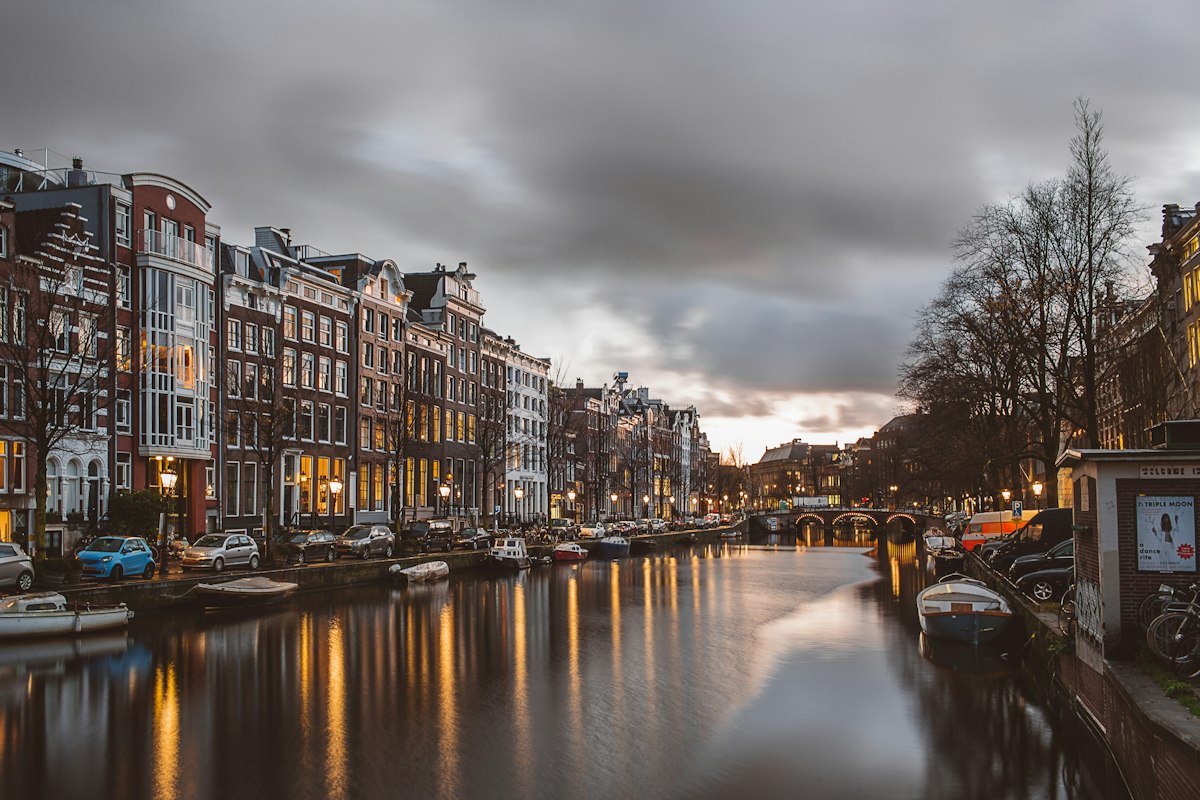
Javastraat, Amsterdam-Oost: What It Was, What It Is, What That Means
Javastraat is not a famous street. It does not appear on the lists of Amsterdam’s most photogenic locations. What it has — or had, depending on when you first walked it — is the particular quality of a street that was genuinely part of a neighbourhood rather than a destination within one.
What it was
Javastraat runs through the Indische Buurt — the Indies neighbourhood — in Amsterdam-Oost, named for the Dutch colonial connection to what is now Indonesia. The name is history compressed into street signs: this was where Indonesian and Surinamese communities settled, where the food culture that resulted from that migration became part of the daily texture of the area.
Twenty-five years ago, Javastraat was a working street. Indonesian and Surinamese shops, a few Turkish grocers, a Moroccan bakery, the kind of café that had been in the same family long enough that the owner’s name was known by everyone who drank there.
A history teacher I know once told me her parents ran a café on Javastraat for twenty-five years before the rent tripled and the calculation stopped making sense. She said this not with bitterness but with the clarity of someone who has spent their professional life explaining to other people’s children how cities change and why. I have thought about that conversation many times since.
What it is now
Javastraat is now what every street that gets discovered eventually becomes: a mixture of what was there and what replaced it. The Indonesian and Surinamese food culture is still present — more so than in many comparable streets — because it was deep enough to survive the first wave of change. The smaller tokos on and around Javastraat still serve the people who know what they are.
But there are also the coffee bars now — the good kind, the serious kind, which is to say the expensive kind. Brunch spots. A natural wine bar. A shop selling ceramics. These things are not bad. The people who run them are not villains. But their presence signals something, and what it signals is that the calculation has shifted: the street now serves people who pay Amsterdam’s current prices as well as people who have been here long enough that the current prices feel like an affront.
The Indische Buurt more broadly
Walk beyond Javastraat into the Indische Buurt and you find the neighbourhood that the street is the commercial edge of. Flats in various states of renovation, playgrounds, community centres, the Flevopark on the eastern edge which is quieter and less manicured than Vondelpark and better for it.
The demographic is still genuinely mixed in a way that is increasingly rare in Amsterdam’s inner neighbourhoods — families who have been here for two or three generations alongside recent arrivals, alongside the young professionals who followed the coffee bars east. Whether that mix holds over the next ten years is a question that no one on Javastraat itself is able to answer with confidence.
Why this matters
Amsterdam has a tendency to talk about gentrification in abstract terms — housing policy, permit systems, the percentage of social housing in each district. These are real things. They are also ways of talking about Javastraat without talking about the café that was there for twenty-five years and then wasn’t.
The café is not the point. The café is a way of understanding the point, which is that a neighbourhood is not its buildings or its street furniture or its coffee bars. It is the accumulation of relationships and routines and specific knowledge that builds up in a place over time. When that accumulates fast enough it becomes something worth visiting. When it is disrupted it becomes something worth mourning. Javastraat is currently both.
Go there. Eat something from one of the tokos — the Indonesian food in the Indische Buurt is some of the best in the city and it is not going to be there at its current price point indefinitely. Walk the side streets. Note what is being renovated and what is not. Think about what it means that you are there.
That is what neighbourhoods are for.
Cas Visser writes about Amsterdam’s neighbourhoods, nightlife, and urban change for Journallo. He grew up in De Pijp and now lives in Noord.