What Den Haag Looks Like From Brussels
I go to Brussels every few months for work. ICC coordination meetings, mostly — the kind where you spend two days in a glass building near the EU quarter and come out knowing slightly more about procedural alignment than you did before. It is useful work. It is not interesting to write about.
What is interesting is what happens when I come back.
The Thalys into Den Haag Centraal takes about an hour and a half from Brussels-Midi. I have done it enough times now that I stop noticing the journey. But I always notice the arrival. There is a specific feeling when the train pulls into Den Haag Centraal — something between relief and recognition — that I did not expect to develop and now cannot imagine being without.
Brussels is a city that performs being a capital
This is not a criticism. Brussels does it well. The EU quarter has a particular kind of architecture — authoritative, slightly anonymous, designed to signal importance without committing to a specific identity. The restaurants near the institutions are good. The beer is excellent. The city has a genuine character underneath the institutional layer, if you know where to look.
But it is a city that knows it is being watched. There is a self-consciousness to it — the awareness of being the administrative centre of something large and contested. You feel it in the way people carry themselves in certain neighbourhoods. In the density of suits on a Tuesday afternoon. In the fact that every conversation in a hotel bar could theoretically be about something that matters to a lot of people.
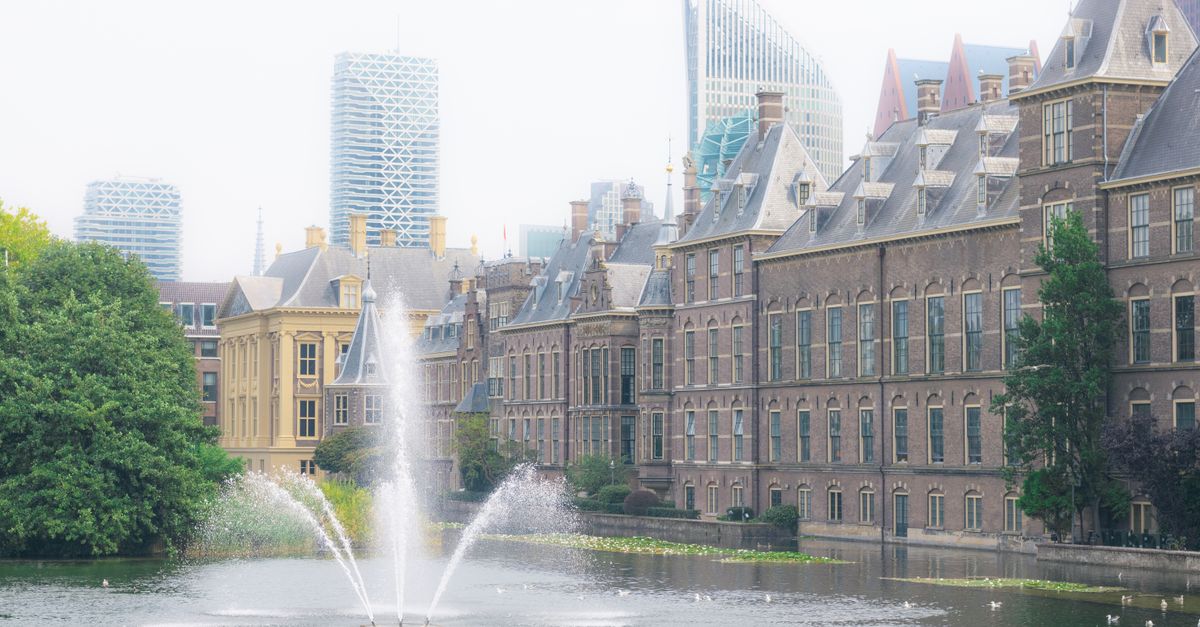
Den Haag has international institutions too. The ICC. The ICJ. Europol. The OPCW. By any measure, it is a city where consequential things happen. But it does not perform this. It is simply where the work gets done, and then people go home to Bezuidenhout or Scheveningen or the Statenkwartier and have dinner.
What I notice coming back
The scale. Den Haag is a city you can understand. Brussels, even after years of visits, still has areas I have never been to and cannot quite place on a mental map. Den Haag fits in the head. I know where things are relative to each other. I know which tram goes where. I know that if I am in the Centrum and I want to be at the sea in twenty minutes, I can be.
The quiet. Not silence — Den Haag is not a quiet city. But there is a register of noise here that is different from Brussels. Less performance. More people just going about things. The market on the Markt. The cyclists on the Laan van Meerdervoort. The particular sound of a Dutch city on a weekday afternoon that I cannot describe precisely but would recognise anywhere.
The sea. You cannot see it from most of the city, but you can feel its proximity. The light is different here than in Brussels — broader, more horizontal. Coming from a landlocked capital, even a few days away makes this noticeable.
The thing about expat cities
I came to Den Haag from Brussels, before that from London, before that from Lagos. I have lived in cities that were not built for me, which is to say I have lived in most cities. The question I used to ask was whether a city would accept me. The question I ask now is whether I want to stay.
Den Haag answers that question differently than the others did. It is not a city that makes a fuss about its internationalism — it simply is international, in the way that a place becomes when it has been hosting people from elsewhere for long enough that it stops being notable. The ICC has been here since 2002. The ICJ since 1946. There are people from everywhere here, doing serious work, living ordinary lives.
That ordinariness is the thing. Brussels is extraordinary and knows it. Den Haag is extraordinary and has largely stopped mentioning it.
I got off the train at Den Haag Centraal on a Thursday evening in April, after three days of meetings in the EU quarter. It was raining lightly, which is not unusual. I cycled home to Bezuidenhout through the Centrum, past the Binnenhof, along the canal. It took fifteen minutes.
Four years in. I still notice the arrival.
James Okafor is an ICC lawyer based in Bezuidenhout, Den Haag. He has lived in the city for four years, arriving via Lagos, London, and Brussels.